

Advance Puppy Food Feeding Guide: A Comprehensive Plan
Navigating puppyhood requires understanding their unique nutritional demands; this guide offers a detailed plan, considering breed size and growth stages for optimal health.
Puppies require a carefully balanced diet, vastly different from adult dogs, to support their rapid growth and development. This critical period demands higher levels of protein, fats, and essential nutrients like calcium and phosphorus for strong bones and tissues.
Early nutrition profoundly impacts a puppy’s lifelong health, influencing everything from immune function to cognitive ability. Breed size significantly dictates these needs; a tiny Yorkie’s requirements differ dramatically from a Great Dane’s. Understanding these distinctions is paramount for responsible puppy care, ensuring they receive the precise nourishment needed to thrive.
Understanding Puppy Growth Stages
Puppy development isn’t uniform; it progresses through distinct stages, each with unique nutritional requirements. These stages – neonatal, transition, weaning, and adolescent – demand adjustments to diet and feeding practices. The neonatal stage (0-3 weeks) focuses on mother’s milk, transitioning to supplemental feeding around 3-7 weeks.
Weaning (7-12 weeks) introduces solid food, while the adolescent stage (3-12 months) requires a diet supporting continued growth, but at a moderated pace. Recognizing these phases allows for tailored nutritional support, maximizing your puppy’s potential and preventing growth-related issues.
Neonatal Stage (0-3 Weeks)
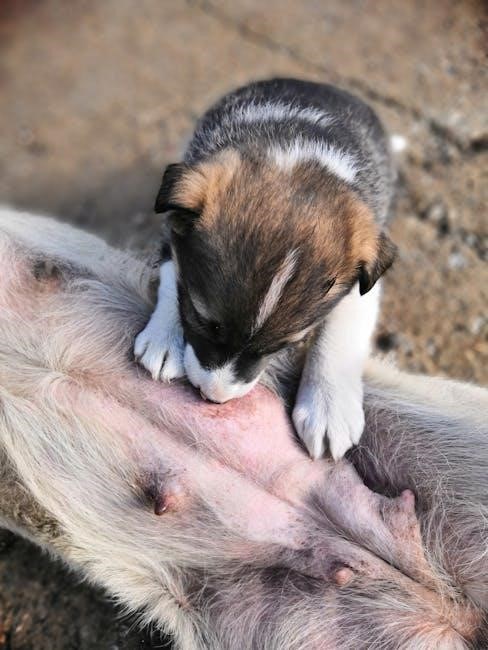
During the first three weeks, puppies are entirely dependent on their mother’s colostrum and milk. This provides crucial antibodies and nutrients for immune system development. Supplementation is generally unnecessary unless the mother is unable to produce sufficient milk or the litter is exceptionally large.
Maintaining a warm and stress-free environment is paramount during this stage. Weigh puppies daily to monitor adequate weight gain, indicating successful nursing. Human intervention should be minimal, focusing on ensuring the mother’s well-being and a clean, safe whelping box.
Transition Stage (3-7 Weeks)
As puppies reach 3-7 weeks, their eyes open, and they become more mobile, signaling the start of the transition stage. This is when introducing solid food, like a puppy-specific gruel made with Advance Puppy Food, begins. Start by mixing a small amount of gruel with the mother’s milk, gradually increasing the proportion over several days.

Offer multiple small meals throughout the day. Observe puppies for acceptance and adjust consistency as needed. Continue nursing alongside solid food, as it still provides vital nutrients. Socialization and exploration are also key during this period, fostering confident development.
Weaning Stage (7-12 Weeks)
The weaning stage, from 7-12 weeks, marks a crucial shift towards solid nutrition. Gradually reduce nursing opportunities as puppies consume more Advance Puppy Food. Offer moistened kibble four times daily, ensuring a consistent supply of fresh water. This period is vital for developing independent eating habits and a strong digestive system.
Continue to monitor weight gain and adjust food portions accordingly. Introduce a variety of textures and flavors within the Advance Puppy Food range to encourage acceptance. Social interaction during mealtimes can also promote healthy eating behaviors.
Adolescent Stage (3-12 Months)
As your puppy enters adolescence (3-12 months), their growth rate slows, but nutritional needs remain high. Continue feeding Advance Puppy Food, adjusting portions based on activity level and breed-specific guidelines. Typically, reduce feeding frequency to three times daily. Monitor body condition closely to prevent rapid growth, especially in large breeds, which can predispose them to skeletal issues.
This stage is ideal for transitioning to an adult formula, guided by your veterinarian’s advice. Ensure a balanced diet supports continued development and maintains optimal health as they approach adulthood.

Why Choose Advance Puppy Food?
Advance Puppy Food is specifically formulated to meet the heightened nutritional demands of growing puppies. It provides a balanced blend of high-quality protein for muscle development, essential fats for brain and vision health, and vital minerals for strong bones and teeth.
Advance recognizes that different breeds mature at varying rates. Therefore, they offer tailored formulas catering to small, medium, large, and giant breed puppies, ensuring optimal growth and minimizing potential health risks associated with improper nutrition during this critical life stage.
Decoding the Advance Puppy Food Label
Understanding an Advance Puppy Food label empowers informed feeding decisions. Look beyond marketing claims and focus on the guaranteed analysis. Prioritize formulas listing a named meat source (chicken, lamb, etc.) as the first ingredient, indicating a high protein content crucial for puppy development.

Pay attention to fat percentages, ensuring a balance for energy and healthy coat development. Check for added vitamins and minerals, like calcium and phosphorus, vital for bone growth. Breed-specific formulas will highlight tailored nutrient profiles, supporting appropriate growth rates and minimizing skeletal issues.
Protein Content & Sources
Puppies require higher protein levels than adult dogs to support rapid growth and muscle development. Advance Puppy Food utilizes high-quality protein sources like chicken, lamb, or fish, providing essential amino acids. Look for formulas with a minimum of 22-32% protein on a dry matter basis, depending on breed size.

Protein quality matters; easily digestible sources are crucial. Avoid foods with vague “meat by-products” listed, opting for named meat meals instead. Adequate protein intake supports a strong immune system and overall vitality during this critical life stage, ensuring a healthy foundation.
Fat Content & Types
Healthy fats are vital for a puppy’s brain development, energy levels, and coat health. Advance Puppy Food incorporates appropriate fat levels, typically between 18-25% on a dry matter basis, adjusted for breed size and activity. Look for sources like chicken fat, fish oil (rich in Omega-3s), and sunflower oil.
Omega-3 fatty acids, particularly DHA, are crucial for cognitive function and vision. Ensure the food provides a balanced Omega-6 to Omega-3 ratio. Avoid excessive fat content, as it can lead to digestive upset or obesity. Proper fat intake fuels growth and supports a shiny, healthy coat.
Breed Size & Calorie Requirements
A puppy’s caloric needs are heavily influenced by their expected adult size. Smaller breeds have higher energy demands per pound of body weight due to faster metabolisms and quicker growth spurts. Conversely, large and giant breed puppies require a more controlled growth rate to prevent skeletal issues.

Advance Puppy Food formulations are tailored to these differences. Large breed puppy food contains moderate calorie levels and balanced calcium-to-phosphorus ratios. Always consult the feeding guide on the packaging, adjusting portions based on your puppy’s individual activity level and body condition.
Small Breed Puppies (Under 20lbs Adult Weight)
Yorkies, Chihuahuas, and Pomeranians – small breed puppies mature rapidly and require nutrient-dense food to fuel their high metabolisms. Advance Puppy Food for Small Breeds delivers concentrated calories and essential nutrients in smaller kibble sizes, making it easier for tiny mouths to chew and digest.
These puppies often experience hypoglycemia, so frequent, small meals are crucial. Follow the feeding guide closely, and monitor their weight and energy levels. Ensure fresh water is always available, and adjust portions as needed to maintain a healthy body condition.
Medium Breed Puppies (20-50lbs Adult Weight)
Beagles, Cocker Spaniels, and Bulldogs fall into the medium breed category, experiencing a moderate growth rate. Advance Puppy Food for Medium Breeds provides a balanced nutrient profile supporting healthy muscle development and bone growth. The kibble size is appropriately designed for comfortable chewing and digestion in this size range.
Medium breed puppies benefit from a consistent feeding schedule, typically three meals a day until six months of age. Monitor their body condition regularly, adjusting portions to prevent overfeeding or underfeeding, and always provide access to fresh, clean water.
Large Breed Puppies (50-90lbs Adult Weight)
Labradors, Golden Retrievers, and German Shepherds represent the large breed category, characterized by rapid growth but a potentially shorter growth period. Advance Puppy Food for Large Breeds is formulated with controlled calcium and phosphorus levels to support healthy skeletal development and minimize the risk of developmental orthopedic diseases.
Careful monitoring of weight and body condition is crucial. Large breed puppies typically require fewer meals per day than smaller breeds, often two to three, to avoid rapid growth. Consistent monitoring and adjustments are key to a healthy outcome.
Giant Breed Puppies (Over 90lbs Adult Weight)
Great Danes, Mastiffs, and Saint Bernards fall into the giant breed category, demanding specialized nutritional support due to their immense size and rapid, yet sensitive, growth phases. Advance Puppy Food for Giant Breeds prioritizes a carefully balanced calcium-to-phosphorus ratio, crucial for preventing skeletal issues like hip dysplasia and osteochondrosis.
These puppies benefit from a slower growth rate, achieved through controlled calorie intake and multiple, smaller meals throughout the day. Consistent weight monitoring and adjustments, guided by your veterinarian, are essential for optimal development.
Feeding Schedule by Age & Breed Size
A structured feeding schedule is vital for healthy puppy development. From 8-12 weeks, offer four meals daily, gradually reducing to three by 16 weeks. Small breeds thrive on approximately ½ to 1 cup daily, while medium breeds need 1 to 2 cups. Large and giant breeds require more, starting at 2-3 cups, adjusted based on activity and growth.
Always divide the daily amount into scheduled meals. Monitor your puppy’s body condition – ribs should be palpable, but not prominently visible. Adjust portions accordingly, and consult your vet for personalized guidance.
Transitioning to Advance Puppy Food
A smooth transition to Advance Puppy Food minimizes digestive upset. Over 7-10 days, gradually increase the proportion of Advance while decreasing the old food. Start with a 25% Advance/75% old food mix, progressing to 50/50, then 75/25, and finally 100% Advance.

Monitor your puppy’s stool for any changes – soft stool indicates the transition is happening too quickly. If issues arise, slow down the process. This gradual approach ensures optimal nutrient absorption and a happy, healthy pup.
Monitoring Your Puppy’s Body Condition
Regularly assess your puppy’s body condition to ensure they’re thriving on Advance Puppy Food. You should be able to feel, but not easily see, their ribs. A visible waistline when viewed from above is ideal. Avoid overfeeding, which can lead to rapid growth and potential joint problems, especially in larger breeds.
Feel for a slight abdominal tuck-up from the side. Adjust feeding amounts based on these observations and your puppy’s activity level. Consistent monitoring helps maintain a healthy weight and supports optimal development.
Common Feeding Mistakes to Avoid
Avoid free-feeding, as it makes monitoring intake difficult and can lead to overeating. Resist the urge to share table scraps, which can disrupt a balanced diet and cause digestive upset. Don’t switch foods abruptly; a gradual transition minimizes stomach issues.
Incorrect portion sizes are a frequent error – always follow the Advance Puppy Food guidelines adjusted for your puppy’s breed and weight. Ignoring individual needs and activity levels can also hinder optimal growth. Consistent monitoring and adjustments are key!
Water Intake: Importance & Monitoring
Fresh, clean water is absolutely vital for a puppy’s health, aiding digestion, nutrient absorption, and temperature regulation. Always ensure constant access to water, especially during and after meals and playtime. Monitor intake; a sudden increase or decrease could signal a health issue.

Puppies generally drink more water relative to their size than adult dogs. Observe for signs of dehydration, like lethargy or dry gums. Adjust water availability based on activity level and environmental temperature, particularly in warmer months.
Supplementation: When is it Necessary?
Generally, a high-quality, complete and balanced puppy food like Advance Puppy Food should provide all necessary nutrients, making supplementation unnecessary. However, certain situations may warrant consideration. Discuss with your veterinarian before adding any supplements.
Specific health conditions, rapid growth spurts, or dietary restrictions might necessitate supplementation. For example, large breed puppies may benefit from joint support supplements under veterinary guidance. Avoid self-supplementing with calcium or vitamins, as imbalances can be detrimental to puppy development.
Addressing Picky Eating Habits
Picky eating can be frustrating! First, rule out medical causes with your veterinarian. Ensure you’re offering the correct amount of Advance Puppy Food for your puppy’s age and breed size – overfeeding can decrease appetite. Establish a consistent feeding schedule and limit treat intake, which can spoil their mealtime interest.

Avoid prolonged offering of food; remove the bowl after 20 minutes. Warming the food slightly can enhance aroma and palatability. Patience is key; don’t give in to begging, and resist the urge to constantly switch foods.
Recognizing Signs of Nutritional Deficiency
Early detection is crucial! Watch for subtle signs like a dull coat, excessive shedding, or skin issues – these can indicate insufficient fats or vitamins. Delayed growth, weak bones, or reluctance to move might suggest calcium or phosphorus imbalances. Lethargy, frequent illness, or a weakened immune system are red flags.
Digestive upset, such as chronic diarrhea or vomiting, could signal food sensitivities or inadequate nutrient absorption. If you observe any of these, promptly consult your veterinarian for a thorough evaluation and dietary adjustments.
When to Consult Your Veterinarian
Don’t hesitate to seek professional guidance! If your puppy displays any signs of nutritional deficiency – a dull coat, slow growth, or digestive issues – a vet visit is essential. Discuss any concerns about your puppy’s weight, appetite changes, or picky eating habits.
Furthermore, consult your veterinarian before making significant dietary changes or adding supplements. They can assess your puppy’s individual needs, recommend the appropriate Advance Puppy Food formula, and rule out underlying health conditions impacting nutrient absorption or utilization.
Advance Puppy Food Product Range Overview
The Advance Puppy Food range is specifically formulated to meet the evolving needs of growing puppies. Options include tailored recipes for small, medium, and large breeds, acknowledging their differing growth rates and potential health concerns.
Each formula prioritizes high-quality protein for muscle development, essential fats for brain function and a healthy coat, and balanced calcium-to-phosphorus ratios for strong bones. Advance also offers specialized options addressing sensitivities or specific dietary requirements, ensuring every puppy thrives.