

12 Week Bodyweight Workout Plan PDF: A Comprehensive Guide
This structured 12-week program offers a progressive approach to building strength, endurance, and lean muscle using bodyweight exercises. Customizable for all fitness levels, it ensures consistent progress and visible results through targeted phases and balanced nutrition.
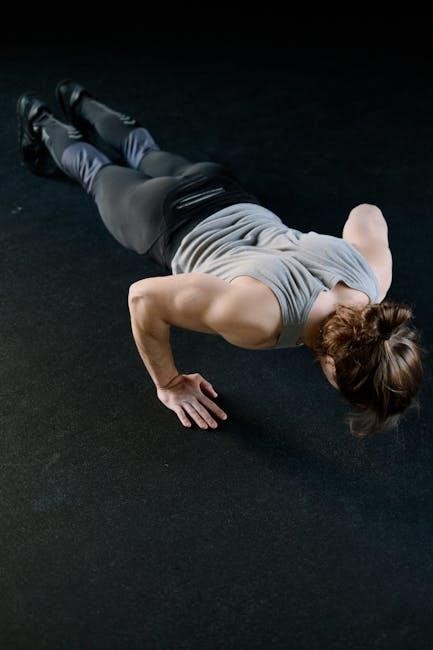
This 12-week bodyweight workout plan is a well-structured program designed to help individuals of all fitness levels achieve their goals. Whether you’re a beginner or an advanced trainee, this plan offers a progressive approach to building strength, endurance, and lean muscle. The program is divided into four phases, each focusing on specific objectives such as foundational movements, strength development, muscle building, and peak performance. With its flexibility, you can perform these exercises anywhere without the need for equipment. The plan emphasizes consistency, proper form, and gradual progression, ensuring sustainable results. By following this guide, you’ll not only improve your physical fitness but also develop a stronger connection with your body. Nutrition and recovery are also highlighted as key components for optimal success.
Understanding the Structure of the Program
The 12-week bodyweight workout plan is strategically divided into four phases, each lasting three weeks. This structure ensures a gradual progression from foundational movements to advanced exercises, allowing your body to adapt and grow stronger. The program is designed to be performed three times a week, with at least one day of rest between sessions. Each phase builds on the previous one, introducing new challenges and intensities. The plan incorporates a mix of strength training, cardio, and mobility work to create a balanced approach to fitness. By following this structured format, you can expect consistent progress and noticeable improvements in strength, endurance, and overall physique. The program’s flexibility also allows for customization based on individual goals and fitness levels.

Benefits of a Bodyweight Workout Plan
A bodyweight workout plan offers numerous benefits, making it an ideal choice for individuals seeking a versatile and effective fitness routine. One of the primary advantages is convenience, as it requires no equipment and can be done anywhere. This accessibility makes it easier to maintain consistency, which is crucial for achieving long-term results. Bodyweight exercises also promote functional strength, improving coordination and balance. Additionally, they enhance muscular endurance and cardiovascular health when performed in circuits or with minimal rest. The progressive nature of the plan ensures continuous challenge, preventing plateaus and fostering steady progress. Furthermore, bodyweight training is low-impact, reducing the risk of injury compared to heavy weightlifting. This approach is also cost-effective, eliminating the need for gym memberships or expensive equipment. Overall, a well-structured bodyweight program can lead to significant improvements in overall fitness and body composition.
Phase 1: Weeks 1-3 ‒ Building Foundations
Phase 1 focuses on mastering basic movements, improving mobility, and building a consistent workout routine. It lays the foundation for progressive overload and increased intensity in later phases.
Week 1: Basic Movements and Mobility
Week 1 introduces fundamental bodyweight exercises to establish a strong foundation. Focus on mastering basic movements like push-ups, inverted rows, and deep squats with a 3-second pause at the bottom. Mobility exercises, such as arm stretches and bird dogs, are incorporated to improve flexibility and joint health. The routine includes 3 sets of 15 push-ups, 3 sets of 10 inverted rows, and 3 sets of deep squats. Plank positions with core engagement are also emphasized to build stability. This week prioritizes proper form and consistency, ensuring a smooth transition into more intense workouts. It’s essential to focus on mobility to prevent injuries and enhance overall movement quality.

Week 2: Progressive Overload and Consistency
Week 2 focuses on building consistency and gradually increasing intensity through progressive overload; Exercises are modified to challenge muscles further, such as increasing reps, sets, or introducing variations like diamond push-ups or single-leg squats. Consistency is key, with workouts performed 3 times a week on non-consecutive days. Proper form is emphasized to prevent injuries and maximize results. This phase introduces isometric holds and mobility drills to enhance flexibility and strength. Tracking progress through a workout log is encouraged to monitor improvements. By maintaining discipline and focus, individuals can build a solid foundation for the upcoming weeks. This phase is crucial for developing a routine and preparing for more advanced movements.

Week 3: Increasing Intensity and Volume
Week 3 ramps up the challenge by increasing both intensity and volume. Workouts now include more complex movements like plyometric push-ups, depth jumps, and advanced variations of core exercises. The number of sets and reps is increased to push muscles further, enhancing strength and endurance. Mobility drills are intensified to improve flexibility and range of motion. This phase introduces dynamic exercises that combine strength and cardio, preparing the body for higher demands. Proper form remains critical to avoid injury. By the end of Week 3, individuals should notice significant improvements in their physical capabilities. This phase sets the stage for the next level of training, ensuring a strong foundation for future progress.
Phase 2: Weeks 4-6 ‒ Strength and Endurance
Phase 2 focuses on building strength and endurance through advanced bodyweight exercises, isometric holds, and cardio integration. Workouts intensify, blending power and stamina for overall fitness improvement.
Week 4: Advanced Bodyweight Exercises
Week 4 introduces advanced bodyweight exercises to enhance strength and endurance. Focus on single-arm rows, deep squats with pauses, and plank variations to target multiple muscle groups. Workouts include 3-5 rounds of exercises like one-arm rows, air deadlifts, and standing bird dogs, aiming for 8-10 reps per set. Incorporate isometric holds, such as 3-point tap balance, to improve core stability and overall control. This phase emphasizes progressive overload, increasing intensity by adding reps or reducing rest time. Proper form and full range of motion are crucial to maximize results and prevent injury. Track progress and adjust routines based on fitness level, ensuring consistent improvement throughout the week.
Week 5: Incorporating Isometric Holds
Week 5 focuses on incorporating isometric holds to enhance strength, stability, and muscle endurance. Exercises like planks, wall sits, and bird dogs are emphasized, with holds lasting 20-30 seconds. These static movements improve core strength and overall body control. Workouts include 3-5 rounds of isometric-focused exercises, such as 3-point tap balance and standing bird dogs, targeting 8-10 reps per set. Isometric holds are added to dynamic movements, increasing time under tension for muscles. This phase boosts muscular endurance and mental discipline, preparing the body for more advanced exercises in later weeks. Proper form and consistency are key to maximizing results and avoiding plateaus.
Week 6: Combining Strength and Cardio
Week 6 integrates strength training with cardiovascular exercises to boost endurance and burn fat. Workouts feature circuit-style routines, combining bodyweight exercises like burpees, jump squats, and mountain climbers. High-Intensity Interval Training (HIIT) is introduced, with 30 seconds of intense effort followed by 30 seconds of rest. This phase includes 3-5 rounds of exercises such as tuck jumps, plank jacks, and squat thrusters, targeting 12-15 reps per set. The combination of strength and cardio enhances cardiovascular fitness, improves muscular endurance, and accelerates fat loss. This phase prepares the body for more intense workouts in the upcoming weeks while maintaining a balanced approach to overall fitness.

Phase 3: Weeks 7-9 ⏤ Muscle Building and Definition
Phase 3 focuses on building lean muscle and enhancing definition through targeted exercises. Weeks 7-9 emphasize upper body strength, lower body power, and core stability, with full-body integration for balance and symmetry.
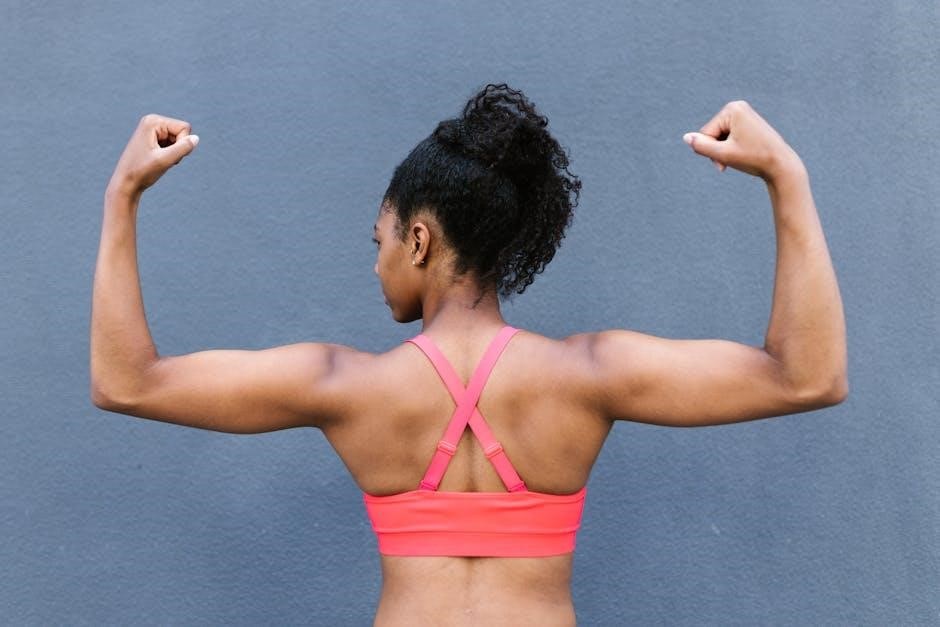
Week 7: Focus on Upper Body Strength
Week 7 emphasizes building upper body strength through exercises like push-ups, inverted rows, and tricep dips. These workouts target the chest, shoulders, and triceps, promoting muscle growth and endurance. The routine includes 4 sets of 12-15 reps for push-ups and 3 sets of 10-12 reps for inverted rows. Tricep dips are performed for 3 sets of 15-20 reps to enhance arm strength. Progression is key, with variations like wide-grip push-ups or single-arm inverted rows to increase difficulty. Proper form is stressed to prevent injury and maximize results. This phase also introduces plyometric exercises, such as clapping push-ups, to boost power and engagement. Consistency and gradual overload ensure continuous progress toward a stronger, more defined upper body.
Week 8: Lower Body and Core Emphasis
Week 8 focuses on strengthening the lower body and core through exercises like deep squats, glute bridges, and side lunges. These movements target the legs, glutes, and hips, improving stability and power. Core workouts include planks, Russian twists, and leg raises to enhance abdominal strength and overall stability. The routine includes 4 sets of 12-15 reps for squats and 3 sets of 15-20 reps for glute bridges. Side lunges are performed for 3 sets of 10-12 reps per leg. Progression involves increasing depth or adding pauses to exercises. Proper form is emphasized to prevent injury and maximize results. This phase also introduces dynamic movements, such as jump squats, to boost explosiveness and engagement. Consistency and gradual overload ensure continuous progress toward a stronger, more stable lower body and core.
Week 9: Full-Body Integration and Balance
Week 9 emphasizes full-body integration, combining upper and lower body movements to enhance coordination and balance. Exercises like push-ups, inverted rows, and deep squats are performed in a circuit format to improve overall fitness. Dynamic movements, such as jump squats and tuck jumps, are introduced to boost explosiveness. Core stability is reinforced with bird dogs and side planks, ensuring a strong foundation. The routine includes 4 circuits of 3 exercises, each performed for 3 sets of 12-15 reps. Progression involves increasing reps or adding complexity to movements. Proper form and controlled execution are prioritized to prevent injury and maximize results. This phase bridges strength and agility, preparing the body for peak performance in the final weeks of the program.
Phase 4: Weeks 10-12 ⏤ Peak Performance
Phase 4 intensifies workouts, focusing on advanced exercises like single-arm rows and tuck jumps to maximize strength, power, and agility; It combines high-intensity circuits with flexibility drills to enhance overall performance and readiness for the final push.
Week 10: Maximizing Strength and Power
Week 10 focuses on advanced bodyweight exercises to maximize strength and power. Incorporate movements like single-arm rows, tuck jumps, and explosive plyometric exercises to enhance muscular power. Increase intensity by reducing rest periods and adding complex combinations. Emphasize proper form to avoid injury while pushing your limits. Introduce isometric holds for extended durations to build endurance and stability. This phase also incorporates dynamic stretching to improve flexibility and mobility, ensuring peak performance. Nutrition plays a critical role; maintain a calorie-surplus diet rich in protein to support muscle growth and recovery. Stay consistent with your routine and track progress to ensure you’re on track for the final push in Week 12.
Week 11: Enhancing Flexibility and Mobility
Week 11 shifts focus to enhancing flexibility and mobility through dynamic stretches and advanced bodyweight movements. Begin with exercises like deep squats, lunges, and leg swings to improve range of motion. Incorporate isometric holds, such as wall sits and side planks, to strengthen stabilizer muscles. Add mobility drills like bird dogs and cat-cow stretches to enhance spinal flexibility. Reduce strength training intensity to allow your body to adapt and recover. Prioritize proper form and controlled movements to prevent injury. Nutrition remains key, with a focus on hydration and balanced meals to support recovery. This phase ensures your body is primed for the final week’s challenges, improving overall athleticism and functional movement. Stay consistent and track your progress to maintain momentum.
Week 12: Final Push and Progress Assessment
Week 12 is your final push to maximize strength, power, and endurance. Focus on high-intensity exercises like plyometric push-ups, single-leg squats, and advanced isometric holds. Incorporate total-body circuits to challenge every muscle group. Assess your progress by comparing before-and-after measurements, such as push-up reps, squat depth, and hold durations. Celebrate improvements and identify areas for further growth. Maintain a balanced nutrition plan to fuel your workouts and aid recovery. Stay motivated and give your best effort in these last days. This phase culminates your 12-week journey, preparing you for continued fitness success. Track your achievements and set new goals for the future. Your dedication will shine in your results. Keep pushing forward and embrace the transformation. Stay consistent and celebrate your progress.
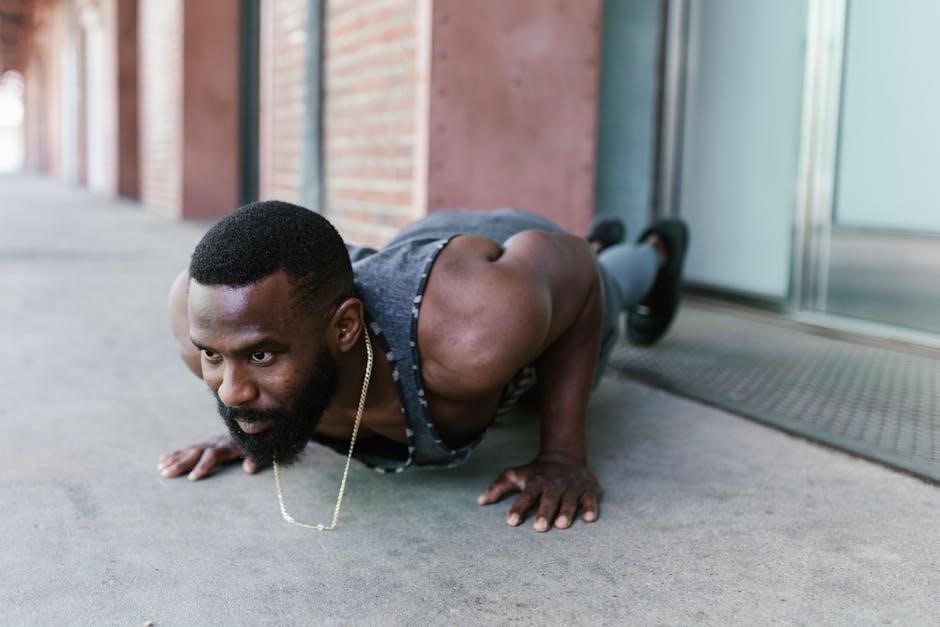
Nutrition and Recovery for Optimal Results
Proper nutrition and recovery are crucial for optimal results. Focus on a balanced diet, hydration, and techniques like foam rolling to support your workout plan.
Importance of Proper Nutrition
A well-balanced diet is essential for fueling your workouts and supporting muscle growth. Focus on consuming lean proteins, complex carbs, and healthy fats to provide energy and aid recovery. Hydration is also critical, as water supports bodily functions and exercise performance. Aim to eat nutrient-dense meals, avoiding processed foods and sugary snacks. Timing your meals around workouts can enhance results, with a pre-workout meal for energy and a post-workout meal for recovery. Proper nutrition not only boosts performance but also helps maintain overall health and accelerates progress toward your fitness goals. A structured meal plan complements the 12-week bodyweight program, ensuring your body has the resources it needs to build strength and endurance effectively.
Recovery Techniques for Better Progress
Recovery is crucial for muscle growth and overall progress in your 12-week bodyweight workout plan. Incorporate stretching and foam rolling to improve flexibility and reduce muscle soreness. Isometric holds can also aid in active recovery by promoting blood flow without overexertion. Ensure adequate sleep, as it plays a vital role in muscle repair and recovery. Additionally, consider techniques like contrast showers or gentle yoga to enhance relaxation and reduce inflammation. Proper recovery allows your body to adapt and grow stronger, ensuring consistent progress throughout the program. By prioritizing recovery, you can maintain intensity and avoid plateaus, ultimately achieving your fitness goals more effectively.

Tracking Progress and Avoiding Plateaus
Track progress by monitoring reps, sets, and exercise difficulty. To avoid plateaus, vary routines, incorporate isometric holds, and adjust intensity to keep challenging your body.

How to Track Your Workout Progress
Tracking progress is essential to stay motivated and ensure the effectiveness of your 12-week bodyweight workout plan. Start by logging your workouts, noting the number of reps, sets, and exercise difficulty. Use a workout log or mobile app to record each session. Take progress photos and measurements weekly to monitor visual changes. Assess strength improvements by attempting more challenging exercises or increasing volume. Track consistency by ensuring you complete all scheduled workouts. Celebrate small milestones, like mastering a difficult movement or increasing endurance, to stay motivated. Regularly review your progress to adjust the plan as needed and avoid plateaus. This structured approach ensures continuous improvement and helps you stay on track throughout the 12 weeks;
Strategies to Overcome Plateaus
Overcoming plateaus in your 12-week bodyweight workout plan requires strategic adjustments to reignite progress. Introduce progressive overload by increasing reps, sets, or difficulty of exercises. Incorporate isometric holds to build strength and endurance. Vary your routine by swapping exercises or adding new challenges, such as single-arm or single-leg variations. Combine strength training with cardio for enhanced fat loss and muscle engagement. Ensure adequate nutrition and recovery, as plateaus can stem from insufficient fuel or rest. Track progress to identify stagnation early and adjust your plan accordingly. Stay consistent, and celebrate small victories to maintain motivation. These strategies will help you break through plateaus and achieve your fitness goals effectively;
Completing the 12-week bodyweight workout plan is a significant achievement, marking your transformation toward strength, endurance, and overall fitness. Celebrate your progress and reflect on how far you’ve come. To continue growing, set new goals, such as advancing to more complex exercises or incorporating additional forms of training. Stay committed to proper nutrition and recovery to maintain and build on your results. Consider exploring specialized programs or working with a coach for further guidance. Remember, fitness is a lifelong journey—keep challenging yourself and embracing new opportunities for growth. Your dedication has laid a strong foundation; now, it’s time to build on it and achieve even greater success.